
Methylated vs Non-Methylated Prohormones: What is the Difference?
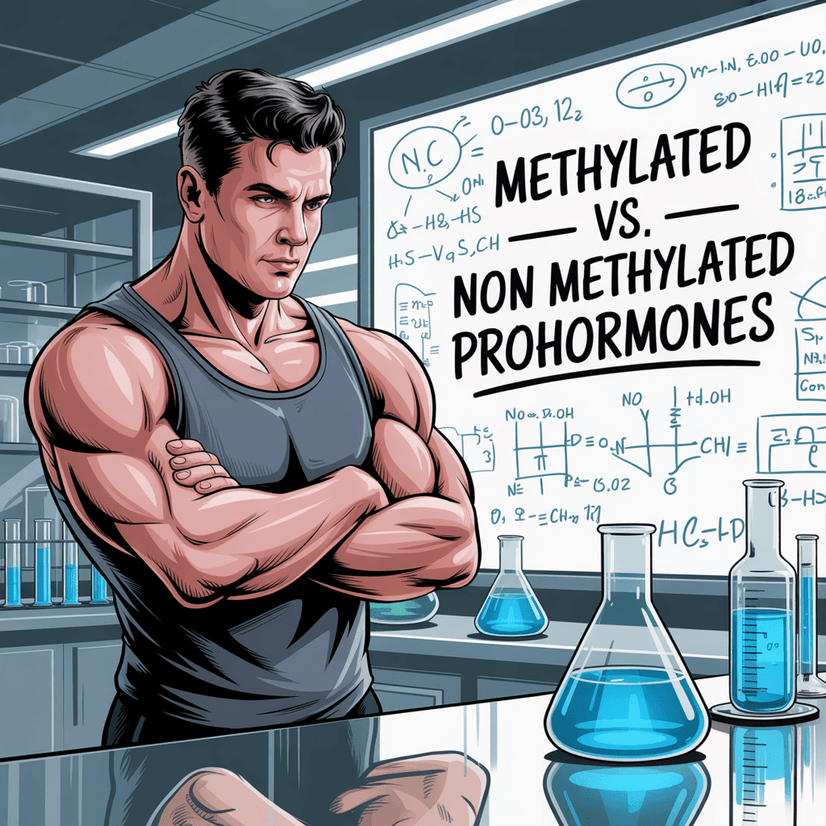
This is a common question that we receive here at Supplement Warehouse. The difference between methylated and non-methylated prohormones. The primary difference between methylated and non-methylated prohormones lies in how they're processed by the liver and how bioavailable they are, meaning how effectively they get into your bloodstream and do their job.
Methylated Prohormones (Banned & Illegal in the United States)
These have a methyl group added to their structure, typically at the C-17 alpha position. This structural tweak does one big thing:
-
Prevents the liver from breaking the compound down too quickly
-
Increases oral bioavailability (more of it survives digestion and gets into your system)
Benefits:
-
Much more potent per milligram.
-
Requires lower doses to achieve muscle-building effects.
Drawbacks:
-
Liver toxic. Because they resist breakdown, they stress the liver more.
-
You must use liver support (e.g., TUDCA, NAC) and limit cycle duration (usually 4–6 weeks).
Legality
Due to methylated prohormones being illegal, you will no longer be able to legally purchase any prohormone that is methylated. You may find them on rogue websites or the gray market, but I definitely wouldn't trust where they came from!
What is Methylation (C-17 Alpha Alkylation)?
Methylation in prohormones refers to the addition of a methyl group (–CH₃) at the 17th carbon position of the steroid nucleus (called C-17 alpha alkylation). This small modification has a big impact.
Function of the Methyl Group:
-
It blocks hepatic enzymes (primarily CYP3A4 and other cytochrome P450 enzymes) from oxidizing and deactivating the steroid.
-
This means more of the active compound survives first-pass metabolism through the liver and enters systemic circulation.
Result:
-
Improved oral bioavailability: The compound is more resistant to liver breakdown and more gets into your blood.
-
Increased anabolic effect at a lower dose.
This is basically why methylated prohormones worked so well and did it in a very short amount of time. Many users would see dramatic results in just 7 days.
Non-Methylated Prohormones (The Legal Guys!)
These lack the methyl group, so the liver can break them down more easily.
Benefits:
-
Much safer for the liver.
-
Can be stacked with other prohormones (including methylated ones).
-
Often better for longer-term use or for first-time users.
Drawbacks:
-
Less potent per dose (lower bioavailability).
-
Often require higher doses or special delivery systems (like Hi-Tech's cyclodextrin + ester delivery) to be effective. That is why it makes sense to only purchase prohormones from Hi-Tech Pharmaceuticals. They have an amazing delivery system that cannot be beat!
How the Liver Processes Prohormones (More Science!)
When any oral compound enters your body, it’s absorbed in the intestines and transported via the portal vein to the liver before reaching systemic circulation. This is called the first-pass effect.
In Non-Methylated Prohormones:
-
Without the methyl group, the liver metabolizes them quickly into inactive forms.
-
The result is lower blood concentration of the active hormone.
-
Some newer non-methylated prohormones are enhanced with delivery technologies (e.g., cyclodextrins, liposomal coatings, ester chains) to bypass or delay hepatic metabolism. This is the advantage of Hi-Tech Pharmaceuticals prohormones.
Enzyme Interactions and Conversion of Prohormones
Prohormones are precursors. They must convert to active hormones in the body using enzymes like:
-
17β-HSD (17-beta hydroxysteroid dehydrogenase) – converts inactive androgens to active testosterone derivatives.
-
5α-reductase – converts testosterone into dihydrotestosterone (DHT) or similar more potent metabolites.
-
Aromatase (CYP19A1) – converts androgens into estrogens, which can lead to side effects like gynecomastia.
Methylated versions:
-
Often skip or bypass some of these conversions because they are already in a more active anabolic state.
-
Some are pre-converted and act directly on androgen receptors.
Again, this is why methylated prohormones worked so well. But also had the potential side effects.
Liver Toxicity Mechanism
The liver breaks down substances through oxidation, conjugation, and excretion.
Methylated compounds:
-
Are resistant to oxidation due to the methyl group.
-
So the liver keeps trying to process them, which:
-
Increases liver enzyme load (ALT, AST),
-
May lead to cholestasis (bile flow blockage),
-
Can cause liver cell damage over time.
-
That's why methylated prohormones carry a higher risk of hepatotoxicity, and why cycle support (TUDCA, Milk Thistle, NAC) is crucial.
When methylated prohormone we legal, it was extremely important to take a liver support supplement such as Tudca during your entire cycle. And these cycles were much shorter than non-methylated prohormones. You would never want to run a cycle longer than 4-5 weeks.
Summary Chart (Scientific View)
| Feature | Methylated | Non-Methylated |
|---|---|---|
| Liver Metabolism | Resists breakdown (C-17 alkyl) | Rapidly metabolized |
| Enzyme Interactions | Often already active | Needs conversion (17β-HSD, etc.) |
| Oral Bioavailability | High | Moderate to low |
| Liver Toxicity Risk | High | Low to moderate |
| Ideal For | Short, high-impact cycles | Safer stacking, longer cycles |
Summary: Which One to Take
-
Use methylated prohormones for stronger, shorter cycles, but monitor your liver. Again, this is if you can find them. Methylated prohormones are illegal in the united states.
-
Use non-methylated for safer, longer cycles or when stacking. You can find a huge selection of these types of prohormones on Supplement Warehouse.
Research, Clinical Trials & Studies
-
Androgenic Steroids – LiverTox (NCBI)
Describes how C‑17α‑alkylated steroids (methylated prohormones) cause liver enzyme elevations, cholestasis, adenomas, and more. https://www.ncbi.nlm.nih.gov/books/NBK548931/ -
Methasteron-Associated Cholestatic Liver Injury
Case series showing cholestatic liver injury in humans using 17α‑alkylated steroids. https://www.cghjournal.org/article/S1542-3565%2807%2901106-8/ -
Vargas et al.: Hepatotoxicity with Methylstenbolone & Stanozolol
Animal and patient data demonstrating liver enzyme rises and cholestasis following methylated prohormone use https://medwinpublishers.com/MJCCS/MJCCS16000176.pdf -
Wikipedia – Metribolone (R1881)
Notes that this potent 17α‑methylated steroid caused severe hepatic dysfunction at very low doses https://en.wikipedia.org/wiki/Metribolone -
FDA Safety Review
The FDA warns about serious liver injury, including hospitalizations, tied to bodybuilding supplements suspected to contain steroids https://www.fda.gov/drugs/drug-safety-and-availability/fda-analysis-shows-body-building-products-labeled-contain-steroid-and-steroid-substances-continue

†The content of this blog post is intended solely for reference and entertainment purposes. We do not offer medical advice or specific guidance regarding the products discussed. Our insights are based on a combination of anecdotal experiences, online studies/reviews, manufacturer details, and customer feedback. While we strive to present accurate and current information, we cannot assure its completeness or its alignment with the most recent product formulations or data. For any concerns or up-to-date information, we recommend visiting the manufacturer's website directly. The opinions and information provided here do not necessarily reflect the views of Supplement Warehouse; they represent the perspectives and information from the manufacturers and users. Furthermore, these statements have not been evaluated by the Food and Drug Administration. The products mentioned are not intended to diagnose, treat, cure, or prevent any disease or illness.
Recent Posts
-
Lipodrene Original vs. Xtreme vs Hardcore vs Elite
Hi-Tech Pharmaceuticals Lipodrene is our most popular fat burning and weight loss supplement we have
-
Is 3-AD Prohormone Supplement Worth It? Let's Talk Truth, Science, and Alternatives
In the ever-expanding world of prohormones, the 3-AD supplement "slash" prohormone often pops up as
-
Black Magic Wand Supplement vs Nutrabio Libido
This is Jeff with Supplement Warehouse. We talk to a lot of male customers each day about ways to in
